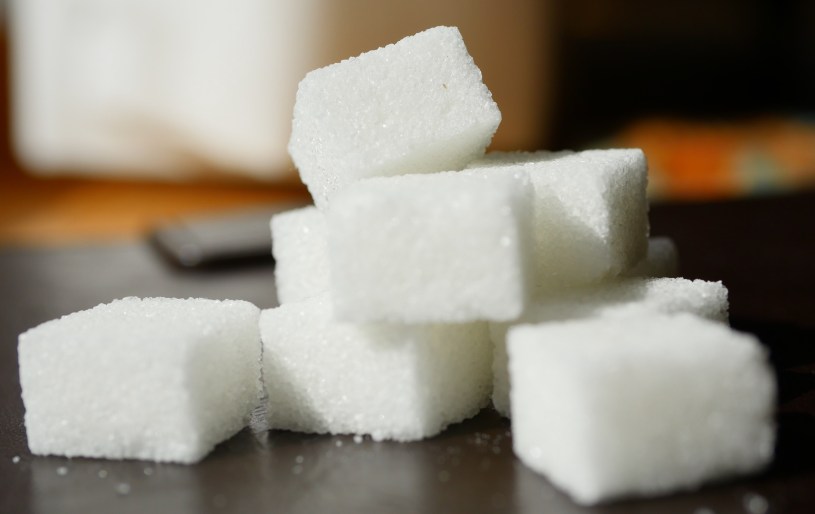
The oldest member of my grower network recalls growing marijuana outdoors in the 1960s, using a technique that involved making thin slices on lower main stalks of marijuana plants, and wrapping the cuts in small cloths soaked in sugar water.
This process was believed to increase “sweetness” of buds’ taste and scent while providing “extra energy,” he explained. The process was used in conjunction with one that had similar alleged benefits: pouring unsulfured blackstrap molasses directly into root zone during watering.
At the time, few growers understood that beneficial root zone microbes feed on root zone carbohydrates, or that beneficial root zone microbes form symbiotic relationships with roots that led to more resilient plants, and a hormonal shift that favors floral metabolite production.
Science later verified that adding small amounts of organic unsulphured blackstrap molasses to root zone benefits roots, but were skeptical of feeding plants sugars via cuts in their stalks.
Fast forward to now, and scientists have proven that plant stem infusion (PSI) is a viable method for feeding plants. Plant stem infusion is vastly more effective than foliar feeding, which is barely effective.
However, effectiveness of stem infusion depends on several factors including nutrients concentration, number of injection sites, pressure of incoming nutrients, and overall plant osmotic condition.
PSI is increasingly used to deliver nutrients, pesticides, vitamins, hormones, and biostimulants into plants. Studies show boron and calcium infusions into soybeans significantly stimulate yield by increasing pod and seed development.
In salt-stressed chickpeas, PSI enhanced drought tolerance and overall vigor. Tree bark injections have effectively mitigated Dutch elm disease, oak wilt, emerald ash borer, apple scab, other tree diseases, and harmful insects.
Sucrose is the most commonly used compound in studies of PSI. Plant stem infusion of sucrose (PSIS) has been documented to benefit maize, barley, wheat, soybean, sweet potato, chickpea, bonsai trees, and now: marijuana plants.
Sucrose plays a crucial role in regulating plant metabolism in plants, acting not only as an energy source but as a signaling molecule. It influences synthesis of secondary metabolites such as flavonoids, phenolic acids, cannabinoids, and anthocyanins, which often accumulate in plants in response to stress conditions.
Carbohydrates like sucrose induce osmotic or carbonyl stress, enhancing production of cannabinoids and terpenoids. They affect primary metabolic pathways, cellular growth, and cellular differentiation, leading to increased floral size and resin gland density.
A 2025 article in the professional journal Industrial Crops & Products documents a study in which researchers used controlled pressure and specialized equipment to inject varying degrees of sucrose concentration into stems of Charlotte’s Angel marijuana plants, using non-injected plants as controls to compare them to.
Unfortunately, Charlotte’s Angel is a high-CBD, low-THC strain. It would be much better if researchers use high-THC strains so we see how their experiment affects THC percentages.
The researchers created four concentrations of sucrose in distilled water: 0 % 7.5 %, 15 % and 30 %. The solution was poured into 800 mm-long, 8mm diameter polyvinyl chloride tubes positioned vertically on a stand beside each infused marijuana plant. The bottoms of these tubes were connected to standard tubing for intravenous (IV) infusion.
On day 70 of their life cycle, each test plant was injected with a 20-gauge hypodermic needle attached to the end of the IV tubing. The needle was placed into the bottom-most node of each test plant to a very short depth.
The tops of the PVC tubes were connected to a compressor, and corresponding pressure (0.5 bar, 1 bar, and 2 bar) was applied. The system remained pressurized for duration of the experiment.
Morphological measurements were conducted on days 78 and 133. Day 133 was the day plants were harvested. Measurements included plant height (excluding roots), main stem diameter, number of lateral branches, length of lateral branches, number of nodes on the main lateral branch, and main lateral branch diameter. Physiological measurements were performed twice during the growth period to determine key factors of plant metabolism and tissue content.
After harvest, plants were divided into flowers, stems, leaves, roots, then dried for 112 hours at 40◦C, followed by an additional 48 hours at 75◦C. After that, each set of plant parts was weighed separately for each plant.
Sucrose-Infused plants showed on average greater mass and height at harvest compared to the control (uninfused) plants. However, only plants injected at an applied pressure of 0.5 bar showed greatly significant increase in height.
All infused plants had on average higher dry mass amounts of flowers, stems and roots than control group. Statistical analysis showed cannabinoid yield per plant was significantly higher in treatments with an applied pressure of 0.5 bar and 15% sucrose and 30 % sucrose compared to control plants without infusion, or to higher pressure treatments with the same sucrose dosages.
At an applied pressure of 0.5 bar, cannabinoid yield per plant increased with the increase in sucrose concentration, but this was not observed using higher pressures infusions.
The lowest total THC concentration was in uninfused control plants; the highest THC concentration came at 0.5 bar and 7.5 % sucrose dose.
As soon as I saw this study, I began researching how to try it in my garden. It looked too complicated, but I found marijuana growers in online cultivation forums posting photos of their homemade infusion kits that look just look ones described in the research article.
The research article made clear the amount of pressure in the infusion system, not just the concentration of sucrose in solution, makes a big difference. The 0.5 bar pressure was helpful; the higher pressures were somewhat harmful. It was unclear how much sucrose solution at 15% or 30% was infused into each plant.
Thus, the home grower needs to build or buy a standardized, efficient injection system that reduces risk of sucrose leakage and contamination while making it easy for you to monitor pressure, flow rate, and sucrose dosage.
Fortunately, plant-grade sucrose is already easily available, as it is used for plant tissue culture and other propagation.
Given that the old grower I mentioned earlier assures me that wrapping a cut marijuana stalk with a gauze tissue infused with sucrose water boosts plants, perhaps a grower could obtain some of the benefits of plant stem infusion without having a fancy contraption hooked up to each plant like patients in a hospital are hooked up to saline solution drip bags.
In this case, you’d replicate the research article experiment by using identical clones or at least plants of the same strain, with some plants receiving stem infusion of sucrose at the proper pressure, with two dose rates ( 15, 30%), and compare their performance to that of plants grown without sucrose infusion.
You might have to several seasons of experiments to get valid results. And remember some beneficial effects might not be easily observed or tested for.
For example, unless you have gas chromatography equipment or something similarly professional, you won’t be able to measure cannabinoid and terpenoid percentages yourself. You might have to send samples of dried buds to a lab for testing.
As always, the good news is that as marijuana is legalized more, scientists feel more comfortable exploring new ways to make cultivation more rewarding. Stem-infusing your plants with sucrose seems to be one of those ways.

