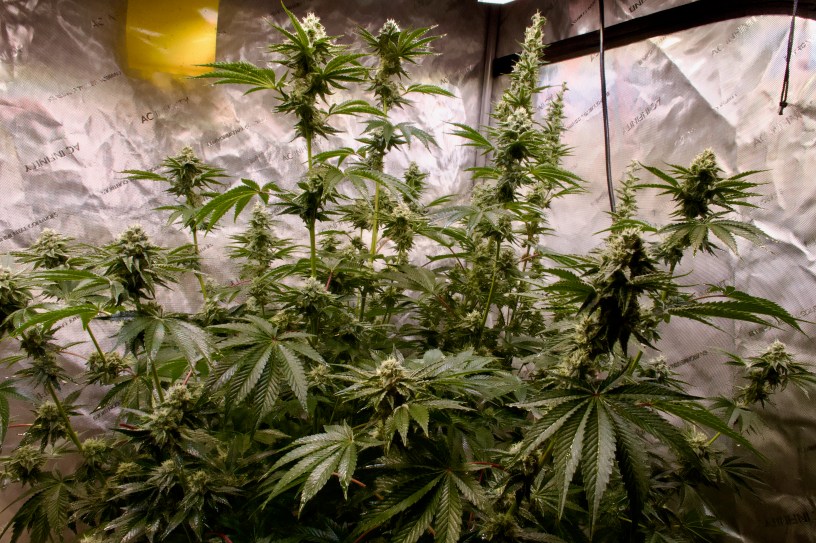
The growers on this magazine team have grown thousands of marijuana plants and hundreds of strains in decades of growing, but when we germinated three seeds of the Limez feminized photoperiod strain from Humboldt Seed Company recently, what we saw in bloom phase was totally unicorn and mind-blowing. Take a look…
Limez Genetics & Origins
Humboldt Seed Company’s description of Limez strain genetics and breeding program on its website is somewhat different than what’s said elsewhere about the strain. On the website, HSC says:
“Limez is a pungent and potent hybrid strain that masterfully combines the zesty citrus notes of lime with the sharp, sour tang of lemon, creating a bold and refreshing flavor profile. Its vibrant green buds are densely packed and blanketed in a thick layer of glistening trichomes, showcasing its exceptional quality. This strain delivers a powerful, uplifting effect that inspires creativity and energizes the mind— making it ideal for tackling artistic projects, brainstorming sessions, or simply enjoying quality time with friends.”
Their website describes the strain as a hybrid cross between Key Lime Pie and “Long Point Lime.” But in an interview in Weed World purporting to quote HSC co-owners Nat Pennington and Benjamin Lind, the strain is described this way:
“Limez is a unique cannabis strain developed in-house at the HSC facility in Grass Valley, resulting from a careful and thoughtful breeding process. This exceptional hybrid is the offspring of the delightful Key Lime Pie and the robust Lemon Kush, combining the best characteristics of its parent strains. The strain was selected as the unicorn during the 2023 pheno hunt, a rigorous process in which numerous genetic variations were examined to identify the most promising variety.
This cultivar is known for its XL yield and impressive characteristics, and it boasts big, chunky, dense buds reminiscent of classic Kush. With a super gassy aroma complemented by subtle notes of freshly squeezed limes, Limez leans into its unique Key Lime cross. Not only is it mold-resistant, but Limez also delivers a late-afternoon cerebral high that’s perfectly balanced with a smooth gas finish inherited from Lemon Kush.”
The crucial difference in the two descriptions is the breeding donor Long Point Lime versus Lemon Kush.
Long Point Lime is an unknown cultivar that has zero identifiable backstory. In contrast, Lemon Kush was apparently at one time an HSC cultivar for sale as photoperiod non-fem seeds, described by HSC as follows:
“Lemon Kush is a mostly Indica from Humboldt Seed Company and can be cultivated indoors, outdoors and greenhouse (Where the plants will need a flowering time of ±55 days) Humboldt Seed Company’s Lemon Kush also available as feminized seeds.
Also known as “Staffs of JAH” This extremely tall variety grows like a cluster of Bamboo, each branch reaching to the heavens. Each cane holds a massive amount of uniformly large buds that absolutely reek of lemon. Get ready to bust out the orchard ladder for this one come harvest time. The Lemon Kush smell comes from her high production of limonene.
Lemon Kush from Humboldt Seed Company is your citrus-scented buddy for relaxation. This delightful hybrid blends Matanuska Mist with OG Kush and Lemon Haze, offering stress relief in 63-70 days. Enjoy the euphoric effects and sweet earthy aromas. The strain is 75% Indica – 25% Sativa (F5) and has a flowering time of 55 days, with extremely tall, uniformly large buds, massive production, distinct citrus smell, high production of Limonene, calming and powerful.”
The ONLY common genetic donor in the two lineage descriptions is Key Lime Pie, a mostly-Indica strain comprised primarily of Indica genetic precursors such as OG Kush, Hindu Kush, Purple Urkel, Cherry Pie, mixed with a little Durban and various forms of Girl Scout Cookies.
We’ve tested Key Lime Pie and found it didn’t much smell or taste like a key lime pie, and its mellow Indica high was nothing special. So we weren’t initially interested in testing Limez.
Indeed the primary reason we tested it was that after we saw Limez in a puzzling European article promoting “low-THC strains,” we contacted HSC to ask why they tout low-THC strains at all, and whether strains in the article really are low-THC.
Several strains touted by the article as low-THC are advertised elsewhere as high-THC, and we’ve grown them to verify they are indeed high-THC.
An HSC expert we’ve always gotten honest information from told us the article promoting low-THC strains was full of mistakes, and Limez is actually a fantastic strain testing at 21-26% THCA, specially designed by HSC co-owner Benjamin Lind. That data provided enough reason to test Limez.
What Other Growers Say About Limez
Before we procure seeds to test a strain, we look at what other growers are saying. There are few Limez grow diaries online. Note these following excerpts are exactly what the growers wrote, without correcting their language/grammar mistakes.
One grower wrote:
“I don’t think I’ve ever grown a plant before with this type of untopped structure. She is stunning in appearance & is absolutely stacked up. I pulled her branches outwards to increase circulation & optimize her bushy structure.
I bet she is probably a pretty good choice indoor plant considering the density of the internodes & very squat structure. Handling drought periods very well. She maintained great color throughout her cycle and always looking well fed.”
The photo of the outdoor Limez plant accompanying this description shows a relatively short, sturdy plant with tons of leaf in the buds. The photo does not look like the three Limez plants we grew.”
In response to that LImez description and photo, another grower said…
“I got a limez in 5th week flower right now and it’s just pure zesty sour lime. There’s no sweetness which is fine with me. It’s awesome. It was a strange plant because it grew out with one cotyledon. So it took a while to grow, I thought it would die. To my surprise it kept growing but it had two main stems instead of one, without topping it! It stayed short but when I flipped it stretched quite a bit. About 2.5 times the size.
It’s not tight in the nodes as yours but it’s still a very healthy looking plant with decent size buds. It just started getting it’s lemon terps going this week. I’m excited to see how much it stinks a couple weeks in the future
Interesting u know i been wondering & thinking about limez & i almost believe wat we got there is very similar to Key lime pie stabilized as seed from Humboldt. KLP is only a rare GSC cut. So to stabilize that cut as seed is something HSC does. They did that exactly with banana OG from cut they released at a similar time.
The Long point lime parent in Limez is a totally un-catalogued genetic not available for any order or research. Mystery really. My genuine guess is if it LPL is an HSC born plant I’d bet it’s a sour X KLP then crossed back to key lime pie cut again.
The reason i say this is key lime pie is absolutely the main type of expression i think that I’m seeing in limez. So mi not surprised if that is present on both parental sides. The effects & terps are almost the same also , but their description provides a more sour tang & pungency than i expect from a regular KLP cut.”
Cultivation Report for Three Limez Feminized Photoperiod Seeds
We germinated three Limez seeds purchased in 2025. They had 100% germination rate in Pro-Mix HP in indoor tent gardens lit by SANlight LEDs.
Our feed program was Pro-Mix HP fed by TPS nutrients. In bloom phase, we use TPS Signal, an alleged terp and yield enhancer. Terminal root zone size was seven gallons per plant, after transplanting up from smaller containers.
Limez was the most robust, fast-growing of the three strains in the test; we flipped it into flower after 33 days in grow phase when plants were 13-16 inches tall. Bloom phase stretch was as much as 250% of original height—mature bloom phase plants topped out between 49-61 inches.
Started topping plants early in grow phase to create multiple main stalks, as is our common practice. During first 3-4 weeks of bloom phase, it became obvious these plants when topped become high-yield beasts that would be trees outdoors producing kilos of dried bud each. In fact, each plant became so large it required its own 5 x 5 foot tent.
As bloom phase progressed, we were happy to see short internodes and internodes quickly filling in. Many of the best HSC strains for terps and highs lack dense buds that fill in along an entire branch. But Limez stacked well, and produced yields of dry weight buds averaging 4-6 ounces per plant, which is phenomenal for indoor growing.
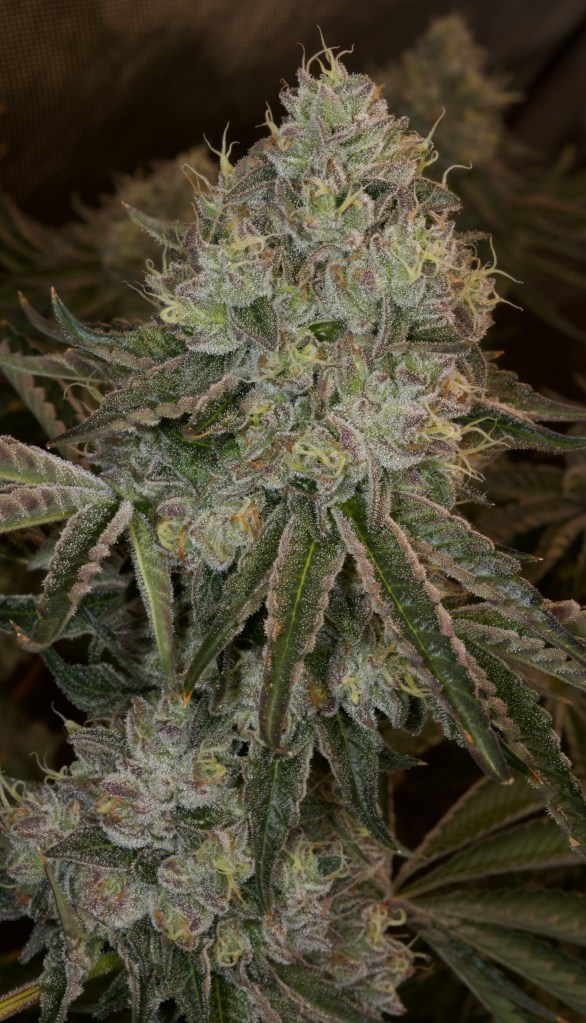
Approximately four weeks into bloom phase we noticed a bizarre trait nobody on our team has ever seen before despite many years growing cannabis: two very distinct bud phenotypes growing next to each other on two of the plants. These buds were so different from each other that we were blown away they were on the same plant.
One bud type was dense, conical, dark green, a typical Kush or Indica bud. There wasn’t much terp smell, but what scent there was included pine, gas, dirt. This bud pheno is what the product photos and online grower review photos show for the strain—a rather thick Indica/OG bud, nothing special.
These buds were slow to develop resin glands, but by week five, their gland density was acceptable enough, but what wasn’t so desirable is many of the glands were surface glands rather than stalked glands with huge resin heads. And gland heads were very small, whether they were leaf surface or stalked.
HSC stipulates a 60-day bloom phase, but this bud pheno still had many tiny, clear glands at day 60, and not much scent. The branches that these dense buds were on were sturdy and thick.
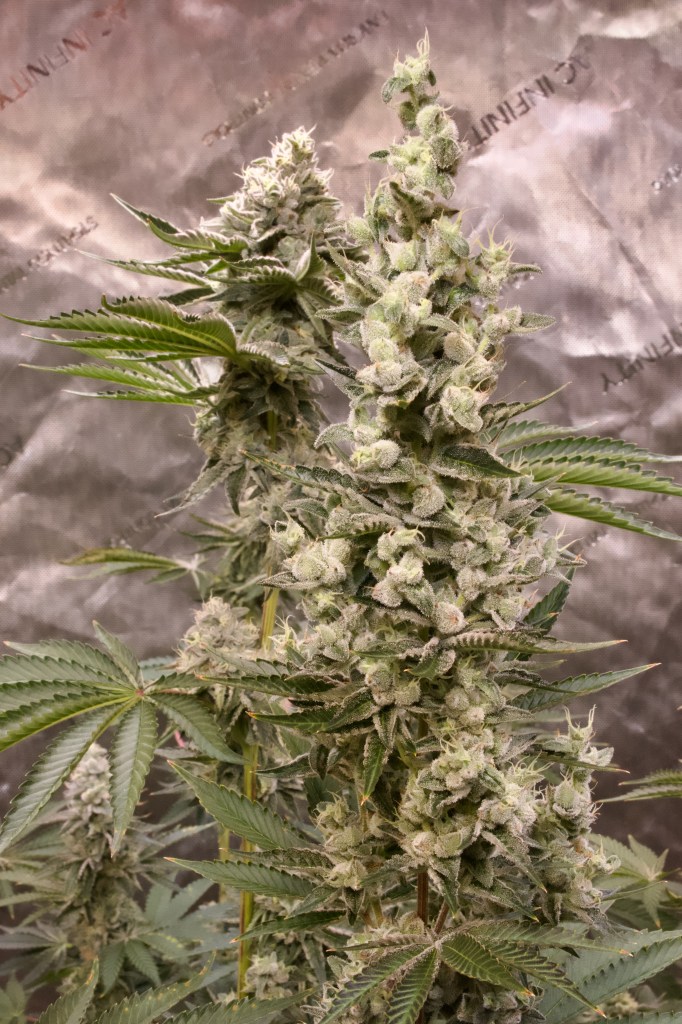
In contrast, on the same two plants was another totally different bud phenotype. The two types of buds didn’t occur on same branches. It wasn’t that an open-structure Sativa-esque bud transitioned into a closed-structure dense Kush bud. They were two completely different types of flowers, different cultivars growing from the same main stalk, like a graft.
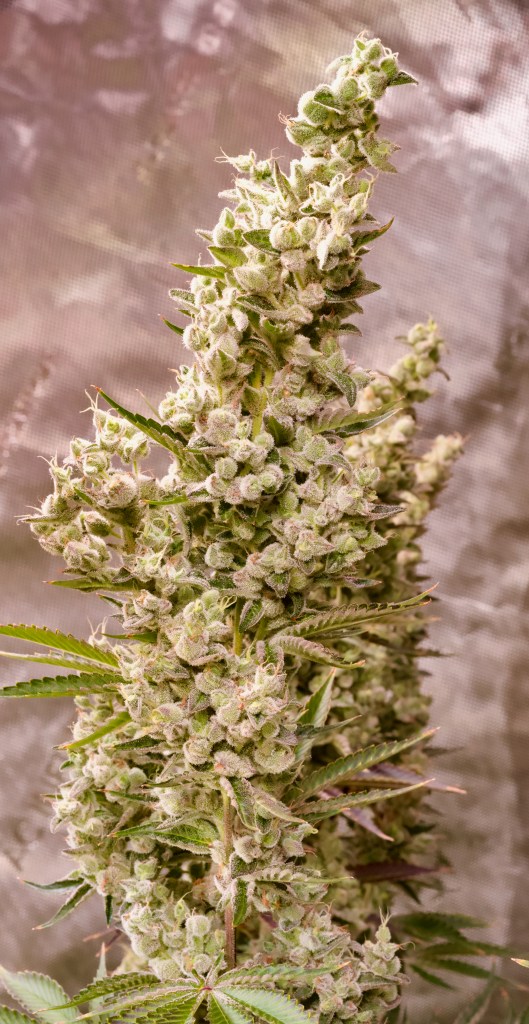
The non-Kush bud type looked like a fox-tailing near-landrace Sativa. It had open structure, grew in irregular wedge shapes, with ancillary bud pirouettes emanating from the branch and main bud. If you’ve ever grown or seen Kali Mist buds (from Serious Seeds), you’ve seen what these buds look like. In fact, the main bud photo of Kail Mist on the Serious website as this article is written (May 2026) looks a lot like the Sativa-type buds on Limez.
These buds had a totally different scent, color, structure, and resin gland array than the Kushy/Indica buds on different branches right next to them!
For example, ALL resin glands were stalked, stalks were taller than usual, resin glands on top were huge and glowed white under the lights in a way that makes White Widow pale in comparison. Resin gland density was lower than on the other type of buds, but the huge glands made up for that. There was slightly more scent from this bud pheno: mild citrus, fuel, gas.
HSC has touted its new strains as “washer strains” especially useful for making extracts due to open-structure buds with large resin glands. The Kush-y buds on Limez have so many unstalked glands and small ones that they are not good for washing.
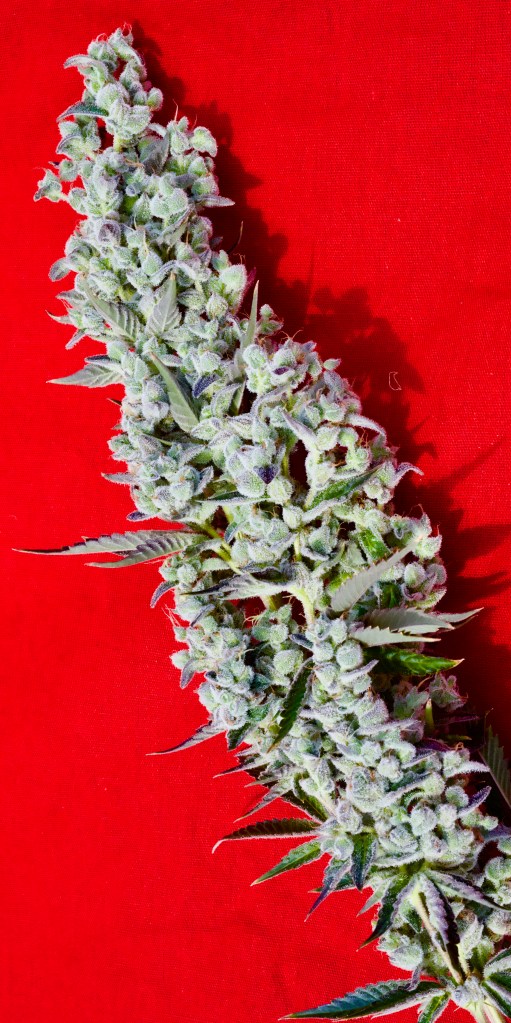
In contrast, the Sativa Limez buds are more than perfect for washing. I mean, take a look at the fourth photo below this article. It shows that the Sativa-esque Limez buds un-manicured, dried flat on a drying net. Notice there’s almost zero leaf. It’s almost all bract, gland, resin stalk and head. That’s about as close as you can get to the equivalent o icewater hash in a dried flower still on its stem.
Indeed, connoisseur bud collectors are willing to pay top dollar for the Sativa version of Limez buds. They noticed first, and we confirmed it, that the Sativa-type buds’ glowing white bracts sometimes pop like popcorn or melt like icewater (bubble) hash when you put flame to them!
Another difference between the two bud phenos is that the Kali Mist-like buds grew on branches that were way less than half the diameter of those that produced the Kushy buds. Not only were these branches thin, they were weak. Several broke and folded over when we were doing photography of the plants, even though we were as gentle as possible.
One beneficial similarity: both types of buds had few leaves. In fact, the Sativa buds had almost no leaves, just stacks of glowing bracts that look like little white cumulus clouds lit by sun.
The ratio of Kush-type to Sativa-type flowers on each plant was about 60-40 in favor of the Kush-type buds.
Before harvest, with two completely different sets of genetics expressing themselves on the same plants, we assumed the Kali Mist buds would take longer to mature and produce a more stimulating Sativa high, compared to the Kushy buds.
But that’s not what happened. The Sativa-like buds developed a lot of cloudy resin glands around day 55 in bloom, and were ready BEFORE the Kushy buds, which still had their very tiny gland heads mostly clear at day 60 when we harvested them.
The Sativa-like buds were more potent than the Kush-y buds, probably about 26.5% THC, with the Kush-y buds around 23%.
The Sativa buds produced a truly hybrid effects profile, which is rare. Usually in a hybrid you have a ratio-effect high with strong, primary mental effects or physical effects, and a minor dose of the other. With these buds, you feel a medicinal body sedation high yet at the same time a powerful Haze mental high.
Given that the Sativa-type buds look like Kali Mist, it’s interesting that part of their psychoactive effects is exactly like a more potent version of a Kali Mist effect, which is stunning visual enhancement due to time perception and color processing changes.
In contrast, the Kush-y buds produce a high similar to Girl Scout Cookies. It starts with Durban Poison-like energy, visual and aural enhancement, minor euphoria, but after about 30 minutes, the high becomes relaxing, with lots of body effects such as heavy limbs, pain relief, orthostatic hypotension, ravenous appetite. Must emphasize the huge desire for sugary foods that this type of Limez flower gives us.
Regardless of their differences, both versions of Limez buds produce a functional, long-peak high that allows increased focus, concentration, and enjoyment. It is not a “couchlock” strain, but an enabling one.
Interestingly, our photos of this bud pheno look exactly like a Mimosa x Girl Scout Cookies cross we tested, sold by Serious Seeds called Seriotica, which has a very similar look and high–but more potency, such that Seriotica is our favorite Girl Scout Cookie strain.
Neither bud type has particularly noteworthy or saleable scent or taste, but the Sativa-like buds are visually beautiful due to their non-standard shape, open structure, and huge resin glands, as you’ll see in the photos, and consumers love having them to show off, because you don’t see buds like that often or at all.
The Dual-Pheno Flower Mystery!
The implications of dual flower phenotypes on one strain are mind-boggling. How and why does a plant produce two starkly-different bud phenos and branches right next to each other? It isn’t because of any inputs or conditions we provided—no other strains in the same grow op, in fact, no other strains ever, have shown this dual-flower trait.
It has to come from the breeding program. Nobody on our team can figure out what kind of breeding choices would create a dual-pheno floral expression, although we do note HSC has been experimenting with tetraploids and triploids—perhaps the three seeds we purchased were somehow experimental?
Of course, your main concern is whether you should grow Limez yourself. Here are the points in favor of that:
- It produces heavy harvests.
- Harvest manicuring is easy because hardly any leaf in the buds.
- Vigorous, resilient, no problems with mold, mildew, pests.
- Potent, long-lasting, intriguing high.
- 55-60 days is all you need in bloom.
- Two different types of highs, potentially, if you get the dual-flower pheno.
- Easy to grow.
- Although stretchy, height shouldn’t be a problem in most indoor gardens.
- Would perform like a beast outdoors, yielding many kilos of dried bud per plant.
- Whether you get a dual flower or single flower pheno crop, both types are worth growing, even if they aren’t on the same plant.
- The one Limez that did not have the dual flower trait expressed all Kush-type flowers; these were similar in potency, appearance, floral structure, gland development, taste, and high to the same type flower from the dual-pheno plants. It’s a pheno worth growing too.
We’re going to test Limez again someday, and wonder if we will get the dual-flower pheno trait again, or not. Perhaps you too will grow Limez and find out. Now take a look at these photos to see proof of the dual-flower trait.
The photo at the top of the article shows ONE Limez plant with two floral phenos at around day 35 of bloom phase. This plant went on to produce a few grams more than six ounces of dried fire bud. The first photo below shows the Limez Indica/Kush floral pheno. The second photo shows the Limez Sativa floral pheno. The third photo shows both phenos growing on the same Limez plant (the Sativa pheno is the front one). The fourth photo shows how beautiful the Sativa floral pheno looks when dried and cured.