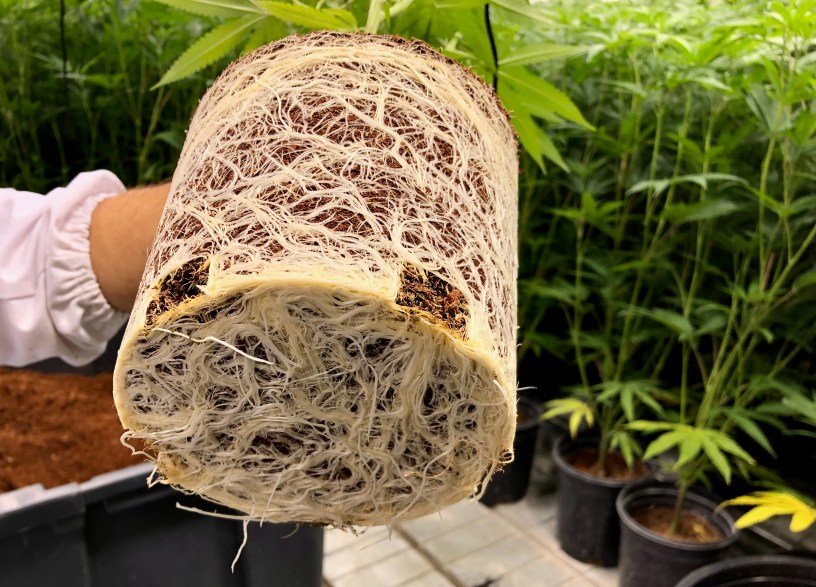
The marijuana root zone is the physical foundation of cannabis plant health, metabolism, and productivity. In natural outdoor growing, marijuana roots are part of a co-evolved ecosystem that protects them and enhances their function, fueled by plant growth-promoting microbes (PGPM) and plant growth-promoting rhizobacteria (PGPR). These living organisms can be fed to the cannabis root zone as “bioinoculants.”
PGPM produce substances that promote plant growth by increasing availability and uptake of nutrients in soil via phosphate solubilization, siderophore and indole-3-acetic acid production, nitrogen fixation, and suppression of plant pathogens.
PGPR increase plant growth rate and nutrients absorption—especially when plants are under stress from drought, heat, overfeeding or underfeeding, and pathogenic attack. They bind with roots using arbuscular mycorrhizal fungi (AMF) to increase root surface area, leading to increased, more-rapid nutrient acquisition.
Specific types of bioinoculants are useful from germination to harvest, and especially for getting seedling, clones, and transplants off to a great start.
Unless you’re growing outdoors in native or living soil with a soil ecosystem that evolved to include the specific PGPM and PGPR species beneficial to marijuana roots, you must add quality, science-based bioinoculants if you want the healthiest root zone.
Unfortunately, growers see a confusing array of different brands of root zone products, with each brand claiming to have PGPMs and/or PGPR that work for marijuana roots. But as with so many other product niches in the marijuana cultivation supplies industry, there are big problems with most of these brands and their products, including:
- They’re not manufactured properly.
- They don’t contain the right species or any species at all
- They aren’t “live in the bottle.”
- They’re very expensive, and don’t give you sufficient return on investment.
- They can cause huge messy problems in pure hydroponics systems such as water culture and in hydroponic reservoirs.
- Organisms have a hard time “colonizing” your cannabis roots when you’re using inert root zone media such as rockwool, and in water culture systems.
- The product uses carrier materials such as clay or cane sugar, which are not good for roots or root zones, and especially bad as foliar sprays.
- None of the brands sold in grow shops provide third-party scientific proof that their products work, and in our decades of testing their products, we do NOT see enough or any increases in root mass, root health, and root function to justify using their products.
A successful microbial inoculant has to colonize external and internal parts of root tissues to establish a symbiotic interaction with roots. It must also successfully, persistently compete against other microorganisms, especially root pathogens.
Moreover, even if bioinoculants initially colonize the cannabis root zone, their continued effectiveness and longevity aren’t always guaranteed. In many cases, bioinoculants when first applied are vigorous and effective, but soon die off due to environmental factors and/or pathogens.
What’s more, some beneficial microbes should only be used early in your plant’s life, while others are best used only during bloom phase, but most companies that sell these products don’t make those distinctions.
Scientific testing to measure cannabis root zone health and bioinoculant efficacy is an emerging research field, not yet as precise and reliable as it should be, but science does show specific breeds of Pseudomonas, Bacillus, Azospirillum brasilense, Gluconacetobacter diazotrophicus, Burkholderia ambifaria, and Herbaspirillum seropedicae species have root zone effectiveness leading to increased rooting, transplant success, growth rate, nutrients absorption, harvest weight, potency, and desirable cannabinoid profiles.
Bioinoculants can also be used as a cannabis foliar spray to attack Botrytis cinerea (gray mold/bud rot) and Trichothecium roseum pathogens commonly found on cannabis plants, especially outdoors. These pathogens damage leaves, flowers, stems and branches.
Indoor cannabis plants are also harmed by Golovinomyces, which causes powdery mildew (PM). PM is a severe fungal disease that ravages leaves and buds, and is often seen in indoor cannabis production. Some marijuana growers use foliar fungicides, sulfur, bicarbonates, horticultural oils and other substances to fight powdery mildew and botrytis, but these sprays often cause at least minor harm to plants and are not safe (or pleasant to taste) on mature buds.
But remember: spraying anything on plants after thick buds are developed INCREASES risk of bud rot.
Adding pure humic acid to root zone feeding with Bacillus subtilis and Pseudomonas aeruginosa has been shown to potentiate bioinoculant effects leading to increased nutrients absorption and production of beneficial root zone compounds.
Some growers believe adding molasses or other sugars to the root zone feeds bioinoculant organisms. This could be true, but also can quickly lead to a toxic root zone that provides ideal habitat for pathogenic microbes and/or pests.
We personally tested 17 different powdered or liquid bioinoculants brands marketed to cannabis growers, but never saw any or enough positive difference in root mass, root health, or plant health between plants without the bioinoculant versus those given bioinoculants that would justify the cost and verify the marketing claims made about those products.
We asked all those manufacturers for third-party scientific proof their products contain the right microbial species for cannabis, are bioactive on the shelf and after opening, and produce the claimed benefits. They refuse to provide any or sufficient information. And some were openly hostile to being asked to provide proof.
You may have heard that “compost tea” benefits your cannabis root zone due to bioinoculants on-board. We’ve tested several different starter kits and organic tea-making methods, but saw no benefits, and later found studies showing compost tea has no positive influence on cannabis root zone bacterial diversity, root health, or plant performance.
Be aware that some bioinoculant products create harmful blooms in hydroponic reservoirs and systems, and that water containing chloramine and/or chlorine (found in almost all municipal tap water) kills beneficial root zone microbes.
Further, in some pure hydroponics systems and sterile root media such as rockwool, beneficial microbes aren’t able to colonize properly, while in other conditions, beneficial microbes flourish too much and degrade the root maintenance system.
We’ve done many side by side tests comparing root development of plants treated with root zone inoculants versus those that were not. There was no evidence those products helped at all. Worse yet, some damaged the root zone and roots because of polluting carrier materials such as clay or sugar, and other product flaws.
At this time, we’re so desperate to find products that enhance the marijuana root zone that we’re querying international Big Ag companies that make root zone inoculants, hoping at least one has scientific proof their products work for the cannabis root zone.
If you want to find out if you’re wasting your money on the existing crop of root zone inoculants, just grow identical clones or phenotype-identical seed plants using the exact same inputs, with some receiving the inoculant and some not. Be sure to keep the root zones isolated from each other and guard against cross-contamination that could spread root zone inoculant to the non-inoculant plants.
After harvest, do a post-mortem on the root zones of each plant, as well as plant performance. If you see obviously whiter, larger, healthier roots, and better plant performance from plants treated with inoculants, you can be pretty sure the inoculant works.
Using living soil and homemade compost full of beneficial microbes is very smart, if you can even find living soil and live compost.
In contrast, growers using the most popular hype-marketed root microbes brands are probably wasting their money. If any beneficial microbes manufacturer wants to get rich and take over the market, provide us scientific proof your products work. Growers KNOW root zones need thriving colonies of the right microbes, have been ripped off by the most popularized root microbes brands, and would love to buy a brand they can be sure actually works.
 Growing Marijuana Perfectly!