Here’s a shocker: every serious indoor marijuana grower is addicted…to reverse osmosis water.
In the growing careers of the magazine team, we’ve been confronted by the horrible reality of running out of reverse osmosis water, and by the greedy corruption and incompetence of the water filtration industry.
Water is essential for cannabis growth–clean water at or near zero parts per million is the only kind you want to use indoors, especially if you’re running deep water culture or similar pure hydroponics.
That’s because municipal water, surface water, and groundwater are contaminated almost everywhere and may include lead, calcium, arsenic, herbicides, chlorine, chloramine, calcium, and other substances that harm plants and hydroponic equipment.
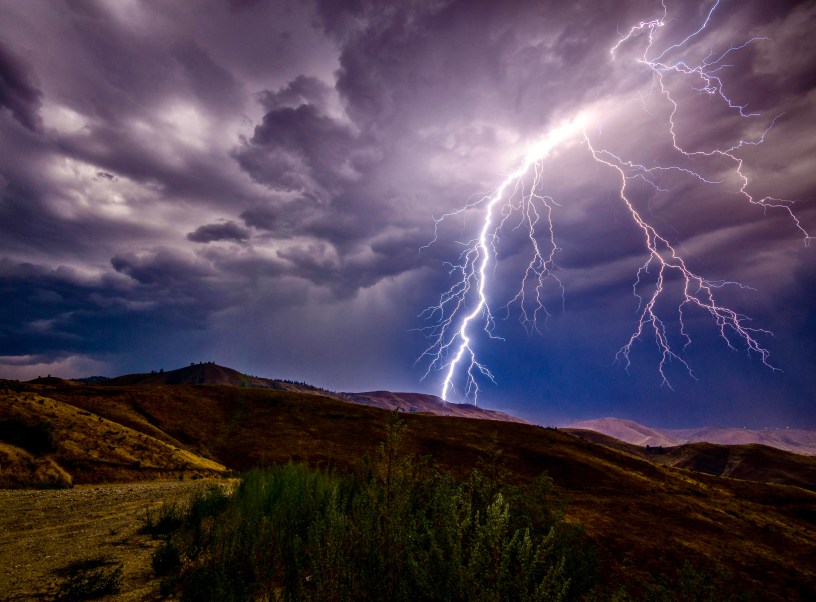
You might be one of the lucky few who has a free source of pure water. Unpolluted rainwater direct from the sky is by far the best water for your cannabis plants, especially when it comes from thunderstorms. A lightning bolt is so hot it breaks apart molecules of nitrogen bonded to oxygen in air, creating nitrate, a potent essential plant nutrient.
This isn’t rainwater that rolled off a shingle roof—that kind of runoff water is polluted by toxins from shingles. It has to be rainwater flowing from the sky directly into a galvanized steel or food-grade container, or from a galvanized steel roof into a safe container. Snow collected direct from the sky is also fine, but melt it first.
Too bad precipitation is unpredictable and seasonal. You need plenty of storage capacity to capture sufficient rain during rainy season to satisfy all your watering needs during dry season.
If your plants are growing outdoors, you pray there’s sufficient rainfall so you don’t need to provide additional water.
If you’re relying on municipal water, tap water, well water, or any water source other than rain, get a lab analysis showing what’s in it. Most municipal water is polluted by added chlorine and chloramines, and may also have other substances that negatively affect cannabis plants, especially by hacking your feed program.
Well water and other non-municipal water may be cleaner, or may contain similar pollution, minus chlorine and chloramines, as well as industrial chemicals, pesticides, and herbicides.
Water quality is especially important when you’re growing in pure hydroponics systems such as bucket culture, deep water culture, rockwool ebb and flow because these systems have no bioactive buffering material for roots to dwell in—even slight water impurities harm roots and sabotage your hydroponic feed program. Particulate water pollution fouls drip emitters, hydroponic pumps, filter membranes, humidifiers and other grow gear.
Chlorine and chloramine are added to municipal water to kill off pathogenic microorganisms that can harm people, or plants. Water-borne pathogens such as Pythium can rot roots but chlorine and chloramine are bad for seeds, seedlings, and cuttings, harm plant tissues, growth, and floral production, while also killing beneficial root zone microbes that enhance root function and protect roots.
Chlorine and chloramine in water are very bad for organic marijuana growers who rely on “living soil” because it kills the life in the soil.
Water quality and lab analysis may reveal your water appears to be pure enough to use, but you need a professional “parts per million/total dissolved solids/EC” meter to measure water particulate load yourself.
This meter doesn’t detect liquid contamination such as chlorine and chloramines, but if the water is more than 100 parts per million (O.2 EC), it can interfere with your feed program.
Symptoms of bad water include:
- Leaf issues that look like nutrients deficiencies or excess.
- Slow growth.
- Leaf and plant mutations.
- Low yield and potency.
- Total crop failure.
- Polluted water can cause hydroponic equipment problems, and is harmful when used as a foliar spray.
If you’re growing in natural or properly amended soil outdoors where plants have lots of space for root growth, or indoors in good soil with very large pot sizes (20 gallons or more), water quality problems are somewhat mitigated by soil buffering.
Indoors, professional growers must invest in water filtration equipment, which unfortunately is often expensive, often requires professional installation, and is hard to use.
The first challenge arises because a reverse osmosis (RO) unit inside the home is rather easily overwhelmed by untreated water. If you can afford it, use whole house filtration to treat all the building’s intake water and remove some but not all impurities before sending the water through the reverse osmosis unit. Water processed only by whole house filtration is still not clean enough for cannabis plants, especially because “water softening” systems often add salt to the water, which is toxic for plants.
When I’ve run generic RO units without whole house filtration, filters clog quickly so I replace them every 2-3 months at a cost of about $300. The initial RO unit and installation cost about $1000. Worse yet, the RO unit wears out after 1-4 years, especially the pressurized “bladder” inside the storage tank, and must be replaced. Further, the process of making RO water wastes a lot of water. For every gallon of RO water generated, 2-4 gallons are lost as waste.
Whole-house filtration cost me about $3000 wears out over time, and must be supplied with water softener salt every month. When you add up the cost of RO and whole house filtration purchase and installation, along with cost of replacing filters and adding salt, and cost of wasted water, you see that producing pure RO water for your plants is one of the most painful costs of growing cannabis.
By testing water quality of all water easily available to you, you might discover that your water is clean enough to be used in your cannabis garden, making you a very lucky person, because that isn’t true for most growers.
Some growers seek to avoid the cost of buying, installing, and running whole-house and/or RO, using marginally effective tricks such as:
- Letting water sit in a bucket open to air and sunlight (ultraviolet) for a few days to evaporate chemicals. This purges chlorine, but does not purge chloramine at all or fast enough. Some growers use a product made for aquariums that allegedly removes chlorine and chloramine. Problem is, even if the two toxins are removed, the water still might be polluted with other substances. And once the chlorine and chloramine are gone, the water might become host to pathogenic microorganisms.
- Getting KDF-85 resin solvent media or filter. KDF-85 is a special material that chemically reacts with pollutants in such a way as to remove most total dissolved solids, but it’s not so easy to use, the filters wear out fast, and worst of all, it does not remove chlorine and chloramine (even though some sellers claim it does).
- Some growers use bulk “purified water” dispensers, which are often found in grocery stores. Most of these devices are not purifying water to RO standards, and are not worth using.
- Talk to your local indoor gardening store about the water in your area, whether they think it will be safe to use unfiltered, and if not, whether you can use a reverse osmosis without whole-house filtration without incurring unreasonable expense.
In regards to this last piece of advice, after one of our colleagues in Florida spent thousands of dollars over several years trying different whole house and reverse osmosis filtration brands and finding all of them were garbage, he called Grace’s Hydroponics store in Tampa. Grace’s is one of the oldest and most honest grow stores in America, so we trust them. They told him about a company none of us had ever heard of: AquaFX.
Turns out that AquaFX is the gold standard of water filtration. The company was started a quarter century ago by a professional engineer, and is still a family business. Founder Marianne Brizio uses her formidable engineering skills to create new and better ways to filter water.
Now her product line includes aquarium RO/DI systems, aquarium filters & filter media, drinking water systems, whole-house water softeners and filters, agricultural & horticultural water filtration systems, automotive spot-free rinse systems, commercial systems for restaurants and coffee shops, laboratory-grade water filters for government agencies, universities, and laboratories.
All the other reverse osmosis gear we’ve found was made (badly) in China. AquaFX builds its gear in the USA, using only the highest-quality filtration materials.
Aqua FX makes the water for large aquarium tradeshows (Aquashella) meaning all the fish and coral stores that go to the show depend on our water being the best for their stock. Aquashella is considered the largest aquarium event in the US
Before we bought anything from AquaFX, we investigated them. One way we knew they were not like other water filtration companies that sell expensive gear that doesn’t adequately filter water, wears out fast, and is expensive to run, is when we saw professional aquarium managers extolling the company’s virtues.
Aqua FX is the water filtration company used for the largest aquarium tradeshow, called Aquashella, in America. All fish and coral stores that go to these shows rely on AquaFX. NASA, The Smithsonian, and dozens of other prestigious organizations also rely on AquaFX.
Unlike other RO brands, AquaFX are effective enough to be used without whole house filtration. All other filters and filtration units we tried were made in China. They’re identical, just with different prices and brand names. AquaFX is the only water filtration company out of dozens we’ve contacted that makes its products at a family-owned facility in the USA!
In cannabis growing, bad water symptoms usually reveal themselves over a period of weeks. You may even get from germination or clone to harvest and have a “satisfactory” harvest using bad water, although that’s not likely. But if your water had been pure RO, and you’re using premium nutrients and all other factors are dialed in perfectly, that same season would have given you even better results.
In aquariums, bad water can quickly kill the animals, so you better make sure your filtration system is 100% perfect. If AquaFX units were inferior like the ones from Home Depot, Amazon, and most hydro stores, fish would die. That’s why the aquarium industry’s explicit praise for AquaFX is such a substantial testimonial.
In marijuana growing there’s a range of choices from “really bad” all the way to “best.” The absolute best water for your plants is rainwater or snow melt, or clean unpolluted well water or surface water without toxic liquid contaminants and below 100 parts per million.
Using a premium reverse osmosis system gives you water 99% as pure as what comes from the sky, except it’s missing natural nitrate. Using tap water that contains chlorine and chloramine, or any water with more than 100 parts per million, is the worst water to use.
If you’re feeling reckless, try an experimental season with the cleanest non-RO water available to you and see if your plants grow from start to finish without leaf problems, and produce large, potent buds. If you discover your water is too dirty, you have to use reverse osmosis—there’s no way to avoid it.
We highly recommend you contact AquaFX and take heed of what they advise. We’ve talked to their technical advisor and customer service people, and it’s refreshing to meet people passionate about their jobs and products, who focus on customer satisfaction. They’re the only trustworthy water filtration company we’ve encountered!
UPDATE: ONE YEAR LATER…It’s now been a full year since we started using AquaFX reverse osmosis. We ran hundreds of gallons through the unit. Its filters lasted longer than those provided by all the other water filtration companies we tested. Originating filtered parts per million was 5-15, and even a year later it was only 40 ppm. This comes from water that enters the RO unit at about 360 ppm!
Changing filters on RO units has always been a big mess. You have to drain the RO tank, and with other brands, when you do, the tank bladder goes bad so there’s no air pressure to deliver RO water through your tap. Then you have to buy a new one. Also many RO brands have defective attachment tubing and end-caps on their filters, making changing filters almost impossible.
That’s why we were pleasantly surprised when AquaFX filters were easy to change, very inexpensive, and the tank bladder did not fail. As stated a year ago, AquaFX is obviously the best reverse osmosis brand you can use!
 Growing Marijuana Perfectly!