Autoflower marijuana seeds are popular, but smart growers soon discover they aren’t worth growing, compared to natural, photoperiod strains.
Autoflower cannabis is created by mixing genetics from low-potency hempy “Ruderalis” marijuana with photoperiod genetics. Ruderalis plants possess a trait that makes them automatically flower within a few weeks of germination, regardless of how much light they’re getting.
Contrast this with photoperiod strains. Grown indoors, they get 18 hours of light per day for 3-5 weeks in what is called “grow phase.” After that, growers change to 12 hours of total darkness and 12 hours of light per day to force photoperiod marijuana to start flowering.
Photoperiod plants start blooming 1-3 weeks after the 12-12 lighting schedule is put in place and continue flowering to maturity as long as that light cycle is strictly enforced.
Autoflower plants start blooming when they’re 1-3 weeks old. Outdoor photoperiod plants start blooming in late summer or autumn as sunlight hours drop.
Autoflower plants are popular because you don’t have to enforce the rigid 12-12 light/darkness protocol to make them bloom, mature, and finish. This makes them way easier to grow outdoors than photoperiod cannabis.
Also, you don’t have to worry as much indoors if stray light enters the place where flowering autoflower plants are. In contrast, photoperiod plants indoors must be in a light-proof environment during bloom phase dark cycle. Why? Because if even a tiny amount of light reaches photoperiod plants during their bloom phase dark period, floral development may be sabotaged–but this does not happen with autoflower marijuana plants.
Autoflower cannabis is somewhat more resilient than photoperiod strains, especially in harsh outdoor growing situations. They’re almost always sold as feminized seeds, so you don’t worry about male flowers and pollen. But this is not a exclusive advantage over photoperiod seeds, which are often feminized too.
Autoflowers usually grow much shorter in height than comparable photoperiod genetics, which can be a benefit for growers who have limited vertical space and/or who want shorter plants for stealth reasons.
My professional grower consortium tested “autoflower Cup winner” strains and many other autoflower seeds. Contrary to claims of autoflower marijuana marketers, the vast majority of autoflower plants are consistently at least 15-35% less THC potent than photoperiod strains with the same base genetics, averaging 17% THC or lower.
The majority of premium photoperiod strains average 21% THC or higher.
And even if an autoflower strain has high THC percentages, the high you get is sadly often not as enjoyable as a photoperiod strain of the same genetics and THC percentage. Autoflower psychoactive effects are more likely to be sedative Indica rather than energizing Sativa because Ruderalis genetics in autoflower strains often create a higher ratio of CBD (cannabidiol), cannabinol, and specific terpenoids that reduce the fun/energizing effects of Delta-9-THC.
Some sellers claim their autoflower strains race from seed to harvest-ready in as few as 5-7 weeks. We’ve never seen that happen—the most potent autoflower strains need 10-14 weeks from seed to harvest, which is not much faster than most premium photoperiod strains.
If an auto-flowering strain contains significant Sativa genetics, such as auto-Haze strains, they may even take longer than a Haze photoperiod strain.
So contrary to marketing hype, autoflower strains are not significantly faster-finishing than premium photoperiod strains, and autoflower strains can’t produce the excellent highs and harvest weight photoperiod strains give you. You can routinely expect 2-4 ounces or much more dried bud from an indoor photoperiod plant. Outdoors, you can get kilos of dried bud from a photoperiod marijuana plant. You’re lucky to get a couple of ounces from all but the most elite autoflower cannabis strains.
When you do the math, you see that for indoor growers, autoflower strains require the same amount or more electricity per season:
For maximum yield and potency, autoflower strains need at least 18-20 hours of direct, intense light per day throughout their entire life cycle. An autoflower strain that requires 11 weeks from germination to harvest needs a total minimum of 1386 hours of indoor lighting for its season.
A photoperiod strain needs 4-5 weeks in grow phase at 18 hours light per day, and 7-9 weeks in bloom phase at 11.5-12 hours per day, for a total of 1380 hours. The photoperiod strain gives you higher potency, heavier yields, and a more stimulating high—using less electricity!
Photoperiod strains are way more versatile than autoflower strains. Example: photoperiod plants can be partially harvested and then rejuvenated at least once or twice, giving you multiple harvests from the same plant.
You can’t do that with autoflower, nor can you easily or at all clone them to make useful younger plants, or breed new strains or make seeds with autoflower, but you can easily do that with photoperiod strains.
Another problem with autoflower marijuana strains is phenotype inconsistency exceeding phenotype inconsistency in well-made photoperiod strains.
There are troubling differences between plants relevant to when each starts blooming, how long bloom phase takes, leaf to resin gland ratio, potency, appearance, morphology, and scent. Phenotype differences make your growing harder.
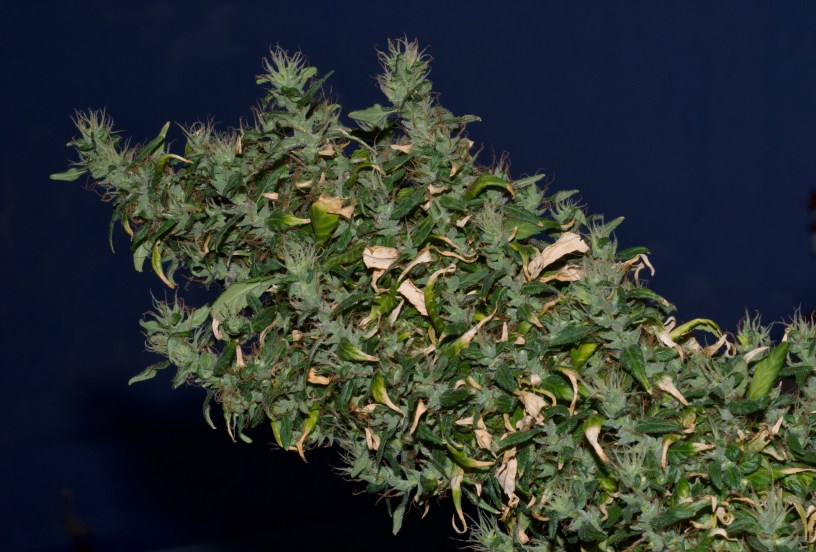
Because they have hempy genetics, autoflowers have way more non-resin bud leaves than premium photoperiods have, making then harder to trim, wasting biomass. The photo at the top of this article shows a typical leafy, hempy, low-potency autoflower bud.
The weirdest, least-potent, leafiest buds I’ve ever seen come from autoflower marijuana, including the so-called Autoflower Cup winners.
Photoperiod cannabis growers can extend grow phase as long as they need to, providing time to trim growing tips and do “training” to create unnaturally wide, multi-branched plants that have more floral branches and heavier harvests than any unmanipulated plant would ever have.
Autoflower growers don’t have this opportunity, because grow phase only lasts 1-4 weeks and plants automatically transition into flowering.
My team experimented with photoperiod-style training and topping with auto strains, and got very bad results. Autoflower marijuana plants didn’t have time to recover, so yields were low. Some stressed plants developed mutations or hermaphrodite clusters.
The one training technique that shows benefits with autoflowers is called low-stress training. This is when you gently bend and tie down branches to make them more horizontal, resulting in more light reaching floral structures. If you’re going do to this, start as soon as your plants have at least five sets of leaves.
In decades of growing and testing cannabis seeds and strains from all major seed companies and dozens of minor ones, I’m sad to report most seed companies are NOT creating reliable, superb seeds and strains. This is especially true in the autoflower category, where amateur breeders and bulk producers dominate. The following are the few autoflower strains made by ethical, professional seed companies that offer worthwhile growing experiences and outcomes:
- Auto Cinderella Jack, Auto Skywalker Haze, Auto Kerosene Krash, Auto Melonade Runtz, from Dutch Passion.
- Auto Durban Poison, Auto Jelly Donutz, Auto Sour Diesel, Auto Strawberry Cheesecake, Apple Blossom, and Auto Humboldt Headband from Humboldt Seed Company.
- Old School Mango Haze, from Mephisto Genetics (Nearly pure Sativa).
Note: Auto Cinderella Jack produces yield and a high as good or better than similar photoperiod genetics. Needing 10-13 weeks from start to finish, it has several phenotypes, one of which gives you a fiery high like Durban Poison, only much stronger. Dutch Passion has made something very special with Auto Cindy Jack, the best autoflower strain my team has grown and consumed.
In fact, Dutch Passion’s founder is credited as the earliest innovator who created auto-flowering cannabis. Dutch Passion breeders are the only ones who appear to have a professional approach to increasing the potency of auto-flowering varieties while also reducing problems inherent to autoflower cannabis, such as excessive leaf percentages in the buds.
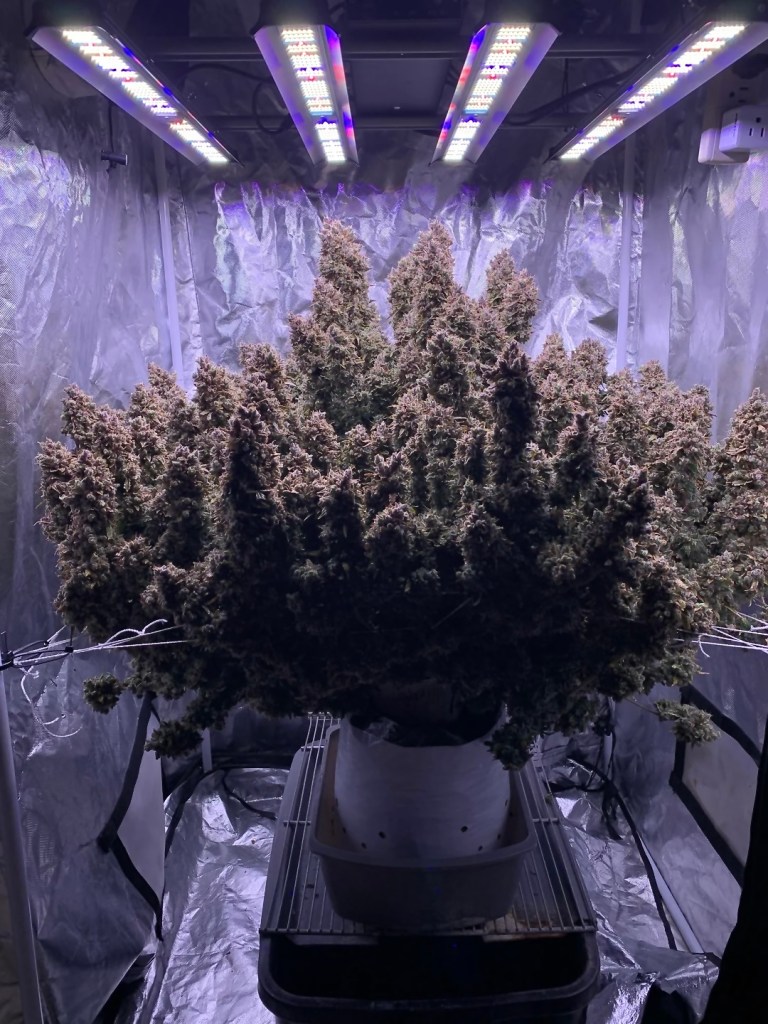
Further, Dutch Passion posts third-party lab analysis for their strains online, showing that some of their autoflower strains have THC percentages comparable to photoperiod strains. Here’s a Dutch Passion Auto Daiquiri-Lime. It’s hempy and the buds are way too full of leaves, but if all you were going to do with it is extract resin glands, it’s still impressive yield and size:
In summary, autoflower marijuana offers only one guaranteed advantage over photoperiod cannabis: you don’t have to rigidly manage light and dark cycles to ensure bloom phase onset and bud maturation–a benefit mainly useful to outdoor growers.
There are plenty of photoperiod strains that need 4-5 weeks in grow phase, and 5-9 weeks in bloom phase. They go from seed to harvest in about the same length of time, or less, than autoflowers, with higher THC percentages, much heavier harvests, and better highs.
Other than the few strains we just recommended, autoflower marijuana is mostly a cruel, pathetic gimmick, not worth growing compared to premium photoperiod marijuana.
 Growing Marijuana Perfectly!